The white glow in a photo, and three other signs to know
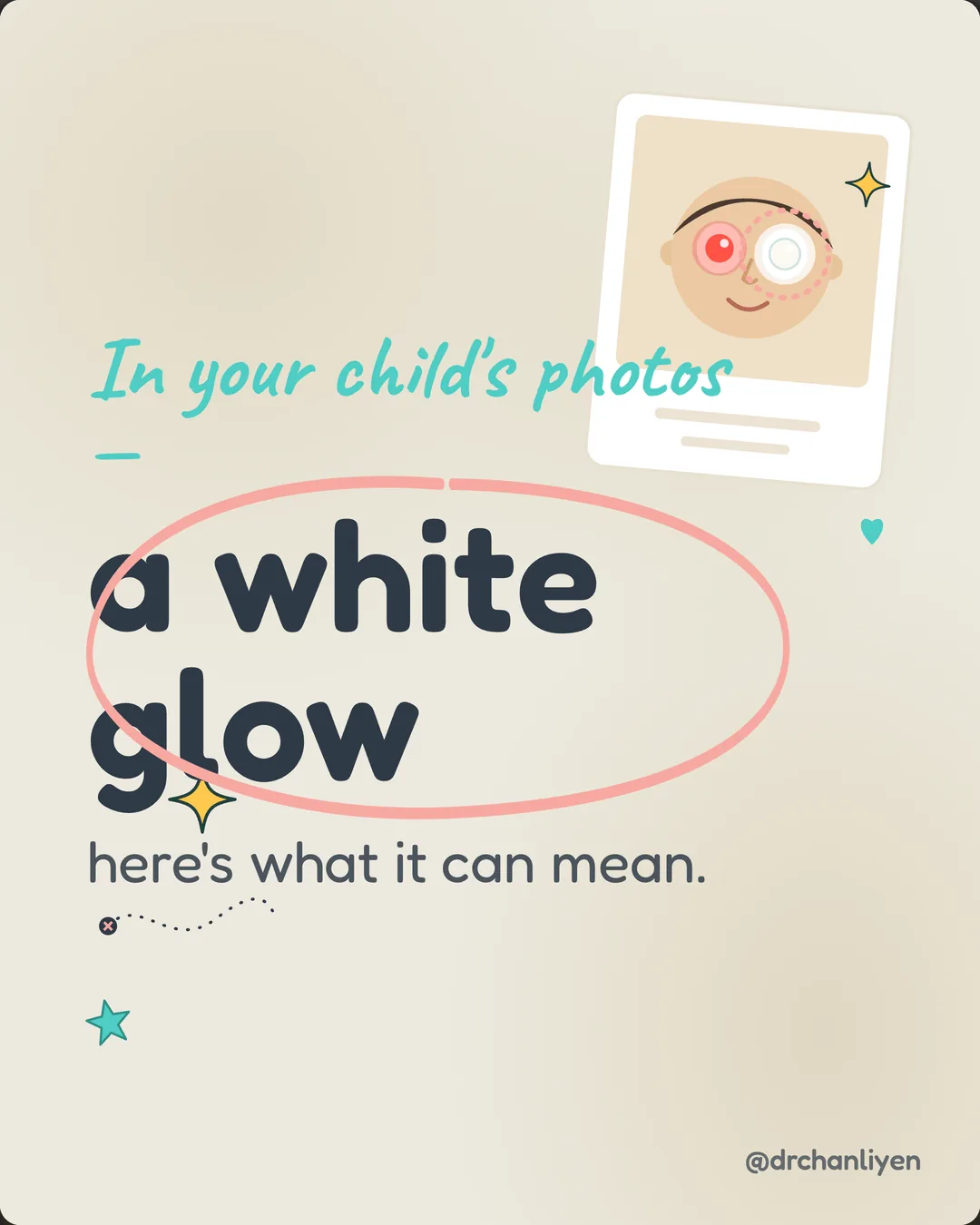
You scrolled back through the photos and one stopped you cold: a pale, glowing pupil where the other eye is ordinary red. Most glows have an innocent explanation. The rare one that doesn't is why this deserves a same-week look.

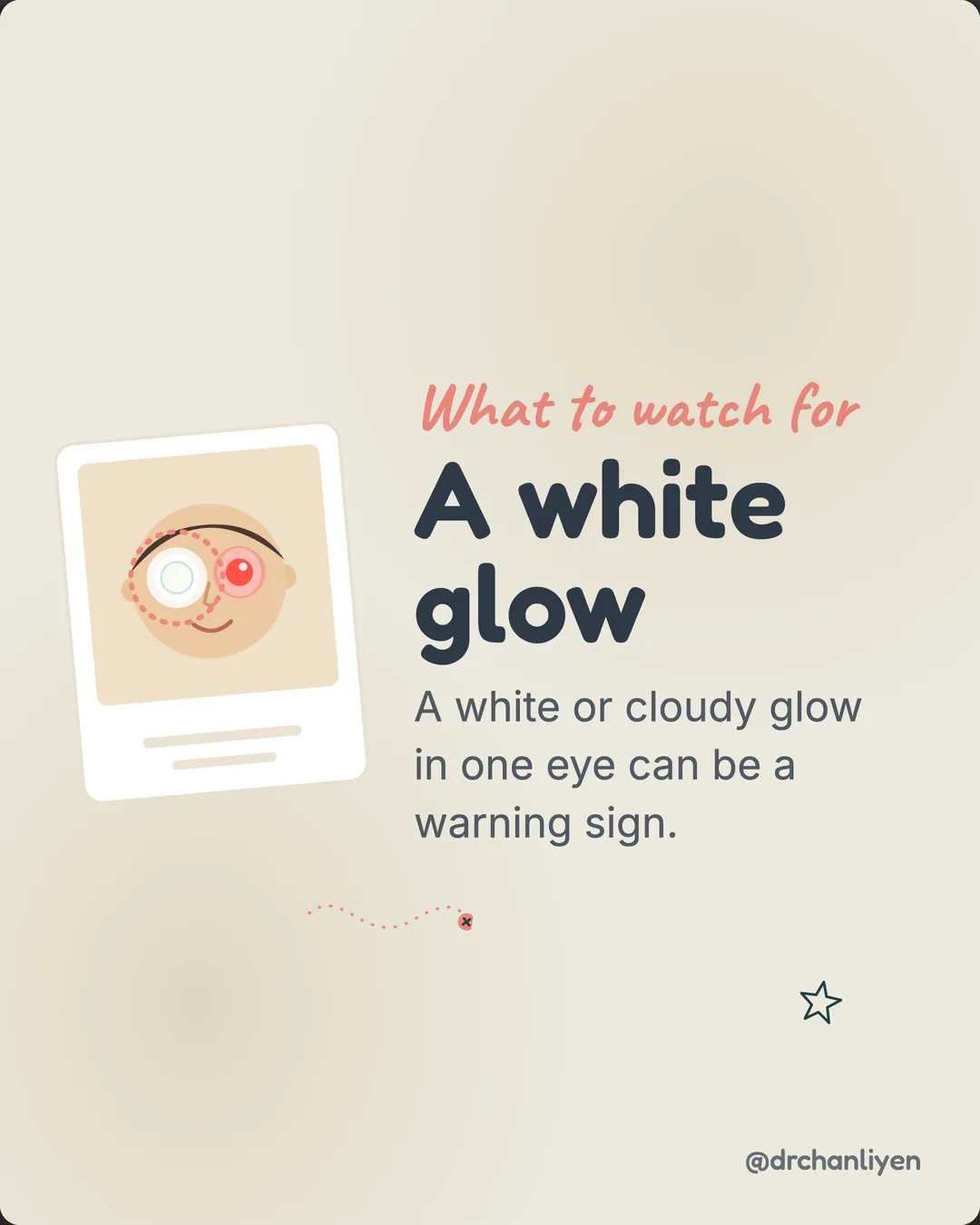
- A white or pale glow in the pupil of a flash photo is called leukocoria, and most of the time it is an artefact, not disease.
- One-off glows are usually the angle of the flash or the optic nerve catching the light. A glow that keeps appearing, in different photos and different light, matters more.
- The reason to be seen quickly is not that the glow is usually serious. It is that the small number of causes that are serious are treated far better when caught early.
- A red reflex check with a doctor's ophthalmoscope takes moments and tells us far more than any photo can.
- Three other signs deserve the same urgency: a new squint, a change in iris colour or a missing red reflex, and an eye that looks different from the other across several weeks of photos.
You know the moment. You are scrolling back through the photos from a birthday, a Raya visit, a Sunday at the pool, and one shot stops you. Both eyes should look the same, a small red dot where the flash bounced back. Instead one pupil is pale, almost white, glowing where the other looks ordinary. You go quiet. You zoom in. You start checking every other photo in the album, and your heart is going faster than it was a minute ago.
I want to answer the question you actually have, not a softened version of it. What is that glow, does it mean what the internet says it might mean, and what do you do tonight, not next month.
I see some version of this almost every week, usually as a message sent late at night with a photo attached. The short answer, before we go any further: you were right to look twice, and there is a clear, fast next step, not a long wait for reassurance.
What is that white glow in the photo?
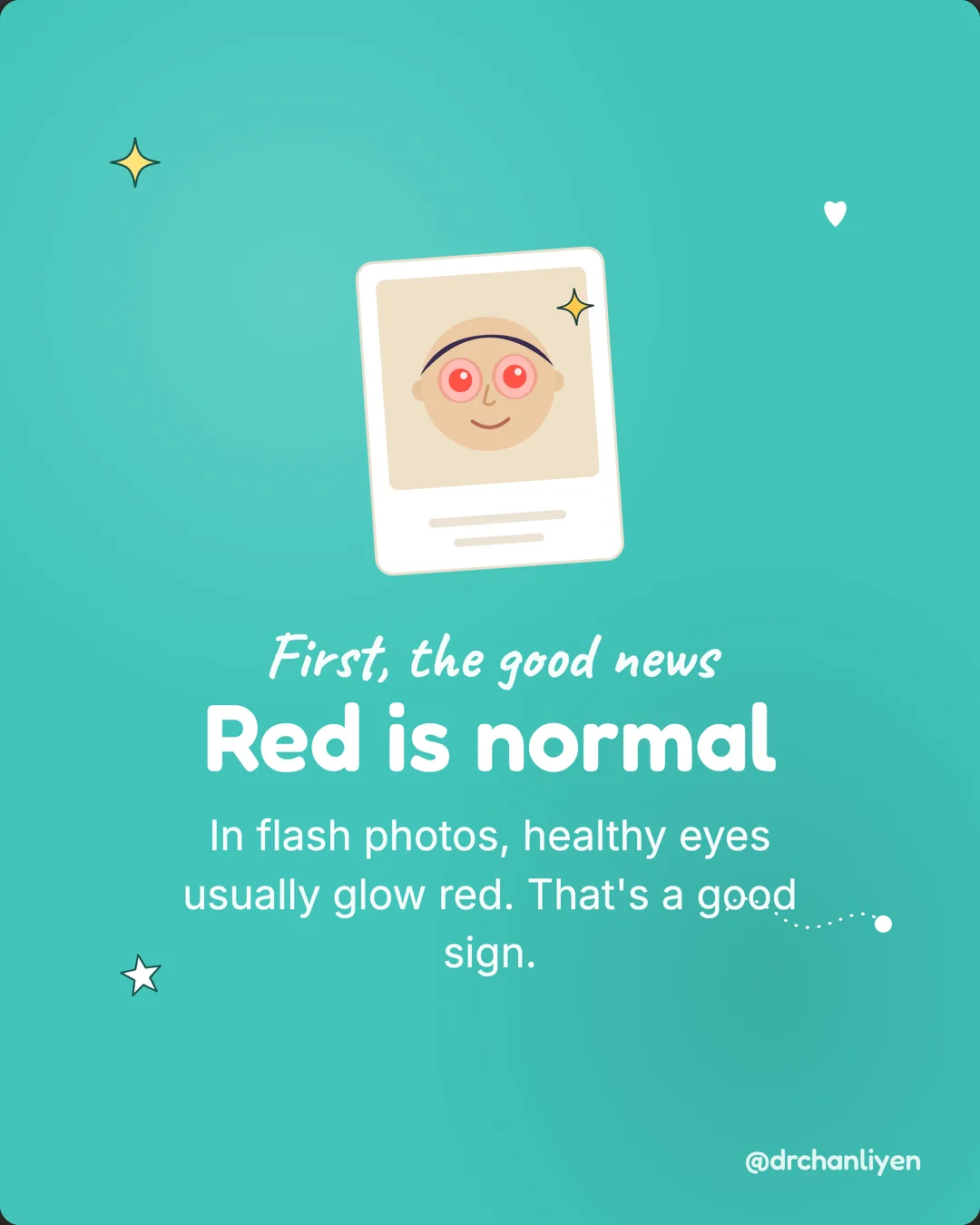
It is called leukocoria, which simply means a white pupil instead of the usual dark or red one. A camera flash sends light straight into the eye, and whatever it hits on the way back out determines the colour we see. In a typical red-eye photo, the flash lights up the blood-rich retina and bounces back red or orange, roughly the same in both eyes.
A white, pale, or golden glow means the light is reflecting off something different, and in most children that something is entirely innocent. If what you see is on the surface of the eye rather than a glow in the pupil, see a white spot in your child's eye.
The two most common innocent causes are the angle of the flash catching the optic nerve, a naturally pale structure at the back of the eye, and simple lighting quirks that vary with the camera and the child's gaze at that exact instant. Neither needs treatment. Neither is a sign of disease.
I only saw it in one photo. Am I overreacting?
No, you are not, and you do not need to apologise for checking. One clear photo is a perfectly good reason to ask for a red reflex check, and that check takes moments in clinic. What I would say to you across my desk is this: seeing it once does not mean something is wrong, and it does not mean you should wait for it to happen again before you act either.
Parents often ask me the natural follow-up: if it were something serious, wouldn't it show up in every photo? It would not, and that surprises people. The glow depends on the exact angle between the flash, the pupil, and the back of the eye at the instant the shutter clicked.
A real cause can appear in one photo out of twenty and stay invisible in the rest, simply because your child's gaze shifted a few degrees. Absence in most photos tells you very little. Presence in even one is worth a look.
Does red-eye reduction on my phone hide the warning sign?
It can blunt it, yes. Red-eye reduction fires a small pre-flash that shrinks the pupil before the real photo is taken, and some phones smooth or edit the reflection afterwards. If a glow has caught your eye once, take a new photo with red-eye reduction switched off, in a room with normal light, and compare both pupils side by side. That comparison, both eyes reacting the same way to the same flash, is useful information to bring with you, though it is not a substitute for an examination.
What other signs should I be watching for, beyond photos?
The photo is the most common way parents notice something, but it is not the only one. Three other signs deserve the same urgency as a recurring glow.
- A squint that has newly appeared: one eye turning in or out where it did not before, especially if it is happening alongside the photos worrying you.
- A change in the coloured part of the eye, the iris, or a red reflex that a doctor checks and finds missing or uneven between the two eyes.
- An eye that looks subtly different from its pair over several weeks of ordinary photos, cloudier, larger, or set differently, even outside of flash shots.
None of these on their own means something is seriously wrong. Together, or repeated, they are the pattern that tells a doctor where to look first. If a squint is the sign that caught your attention, here is how to tell a real drift from the illusion a baby's nose shape can create.
Why does this need a same-week appointment rather than the next routine check?
Because of what the small number of serious causes are, not because the glow itself is usually one of them. A white glow can come from a childhood cataract, from a condition called Coats disease, or, rarely, from retinoblastoma, a cancer of the retina. All three are far more treatable the earlier they are found, and retinoblastoma in particular has a narrow window where early treatment makes the biggest difference to both sight and survival.
I will give you the real numbers rather than leave you guessing at them. Retinoblastoma affects roughly 6,000 children worldwide each year, almost always before the age of five. It is rare. Most children who ever have a glowing photo turn out to have nothing more than an artefact of the flash.
But when retinoblastoma is caught and treated early, more than 95 in 100 children can be cured. That figure is the entire reason for urgency: not because the odds are bad, but because acting quickly is what keeps them good.
What actually happens at the doctor's visit?
Something quick and specific: a red reflex test. I shine an ophthalmoscope into each pupil from about arm's length and look at the reflection that comes back, comparing one eye against the other. A normal reflex is even, red, and identical between the two sides. This is the same principle behind the newborn eye check every baby has in the first days of life, done again, more carefully, because you have brought me a specific concern.
If anything about that reflex looks uneven, we move to a fuller look at the inside of the eye, occasionally with drops to widen the pupil, the same drops used for a full children's eye examination. None of it needs your child to read a chart or answer a single question.
Bring the photo. It genuinely helps to see exactly what caught your eye, even though the examination itself, not the picture, is what settles the question. If your child has never had a formal eye check before this, the schedule for a baby's first eye checks is a good thing to know regardless of how this visit goes.
Depending on age and what we find, a fuller look at the back of the eye may follow, sometimes on the same visit, sometimes at a short-notice follow-up, but it rarely needs a general anaesthetic unless a young child cannot keep still enough for the dilated view we need. When a child cannot keep still for the dilated view, the alternative is described in an examination under anaesthesia.
My GP already checked with a torch and said it's fine. Do I still need a specialist?
If the glow was a genuine one-off and the reflex looked even and normal in both eyes on that examination, that is real reassurance, and you do not need to chase further reassurance you already have. But a torch in an ordinary consultation room is not the same view as an ophthalmoscope used specifically for this purpose.
If the glow has come back, if the exam felt rushed, or if it is simply still sitting at the back of your mind at midnight, ask for a referral to a paediatric eye clinic. In Malaysia there is no routine dilated eye screening for infants, so a flash photo is sometimes the only thing that ever catches this, which is exactly why I would rather you ask twice than not at all.
Most parents who bring me a photo like this leave with nothing more than the relief of having checked. If you are weighing how soon other things you notice in a child's eye should be seen, is this urgent? puts them side by side. That is not wasted time. It is the appointment doing exactly what it is for.

- A white, pale or glowing pupil appears in more than one photo, in different light, or keeps recurring in the same eye.
- One eye has suddenly started to turn in or out, especially alongside a glow in photos.
- The coloured part of one eye looks different from the other, or has changed colour recently.
- One eye looks cloudy, larger, or visibly different from its pair, even outside of photographs.
- You have already seen a glow once and it is on your mind. Do not wait for it to happen again before asking for a red reflex check.
Common questions
I only saw it in one photo, not all of them. Am I overreacting?
If it were something serious, wouldn't it show up in every single photo?
What's the difference between a white glow and ordinary red-eye?
Does my phone's red-eye reduction hide the warning sign?
Should I worry this is retinoblastoma?
How common is retinoblastoma, actually?
My GP or paediatrician looked with a torch and said it's fine. Should I still see an eye specialist?
I am in Malaysia and I have seen the glow. What exactly do I do next?
- American Academy of Ophthalmology · What is retinoblastoma · www.aao.org
- AAPOS · Retinoblastoma · aapos.org
- NHS · Retinoblastoma, symptoms · www.nhs.uk
- NHS · Retinoblastoma, what it is · www.nhs.uk